Iodine Salt to Treat Radiation?

Fig. 1: Next, movie cover (derricklferguson)

Over winter break I watched the movie Next starring Nicolas Cage with my dad. In the movie, the FBI was able to link a dead woman knifed in her room to a Russian nuclear attack plan because of a few potassium iodide (KI) pills found at the crime scene. The star FBI policewoman (who is also President Coin from the Hunger Games movies!) was quick in realizing that the only reason someone would take potassium iodide pills was to combat radiation poisoning. Before this movie, I had never heard of KI being used for this purpose, and expectedly I was skeptical. Before you judge me, imagine if someone had told you that a sugar pill could prevent you from dying of stomach cancer. That is the same magnitude of ridiculousness that I felt the whole KI pill thing had to be.

But, I was wrong of course. KI supplements are an established treatment for preventing thyroid cancer, one of the biggest health impacts observed after the Chernobyl meltdown [1]. So how is it that something so simple as a salt pill, because that’s what it is, can prevent one of the most odious conditions of modern times caused by a technology that took humans thousands of years to create? Turns out it’s by inhibition [2]. KI pills for thyroid cancer prevention aren’t made up of just any iodine; they are made of the 127I isotope, which is iodine’s only stable form [3]. Ingested iodine is taken up by the thyroid gland, and if the iodine is of a radioactive isotope the subsequently produced radiation can cause thyroid cancer. KI pills work by dumping stable 127I into the person’s blood stream, flooding the thyroid and reducing uptake of other radioactive iodine isotopes. KI pills only work in preventing thyroid cancer caused by radioactive iodine exposure, however, not other conditions caused by general radiation exposure.
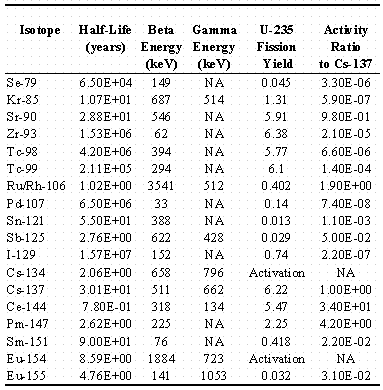
Fig. 2: 235U fission product properties (Hochel, R. C.)

So, a few other questions obviously arise from this talk of iodide pills, one of which being where do the radioactive iodine isotopes come from in the context of nuclear fission? Fission of heavy atoms results in atoms of lighter weight and free neutrons that propagate the nuclear fission reaction. Some of the fission products of 235U are various iodine isotopes, including 135I (6.33% yield), 131I (2.83% yield) and 129I (0.9% yield) [4]. These are clearly not the main fission products of 235U, but they can still accumulate in contaminated environments, especially where large-scale nuclear fission reactions were involved such as nuclear meltdowns and atomic bomb testing sites. Another question to answer is how do the radioactive isotopes end up being ingested by people in contaminated regions? Scientists at Dartmouth, New Hampshire were able to measure increases in 135I concentration, an indicator also of the presence of undetectable 129I, on land but especially in local streams a year after the 2011 Fukushima meltdown in Japan [5]. They cited the increase as due to nuclear fallout from the Fukushima incident that blew across the continent and deposited itself in groundwater sources. This implies that the radioactive iodine isotopes can be both airborne and waterborne. If everything is coated in radioactive iodine, ingestion is believably imminent. To bring us full circle, there was also a run on KI pills in 2011 on the American West Coast due to fears of radioactive iodine finding its way into homes and food supplies there as well [6]. It’s funny how analyzing a simple movie premise can take us all the way to a not-so-late nuclear disaster.

Yesterday was the first day of classes, and soon enough school will be back in full swing. I've based my schedule this semester off of a google calendar with the idea that better organization will make hectic school life just a bit easier, so we'll see how that goes. My course load is two materials science classes, one materials science lab, orgo 2 and an anthropology class on modern culture. I'm hopeful that this semester will go better than last, and I'll keep you guys updated on what goes on. If you like this article or have ideas for another, be sure to leave me a comment below. Thanks for reading!

Why Cold Drinks "Sweat"

With a horrible heat wave hitting the Philadelphia area, it’s good to think cool thoughts. Already feeling the heat last night, I left a coconut water in the freezer with the intent to drink it but forgot and so took it to work this morning frozen solid. I figured since it’s so hot outside and the metal can is a good conductor, it’d probably melt pretty quickly. And while the ice in immediate contact did melt, the inside remained frozen and I had to cut the top open with scissors to eat it. Before I figured this out, the can had already shed a puddle at my desk. Have you ever wondered why it is that cold things "sweat."

Fig. 1: My favorite coconut juice brand, Foco (pinstopin.com)

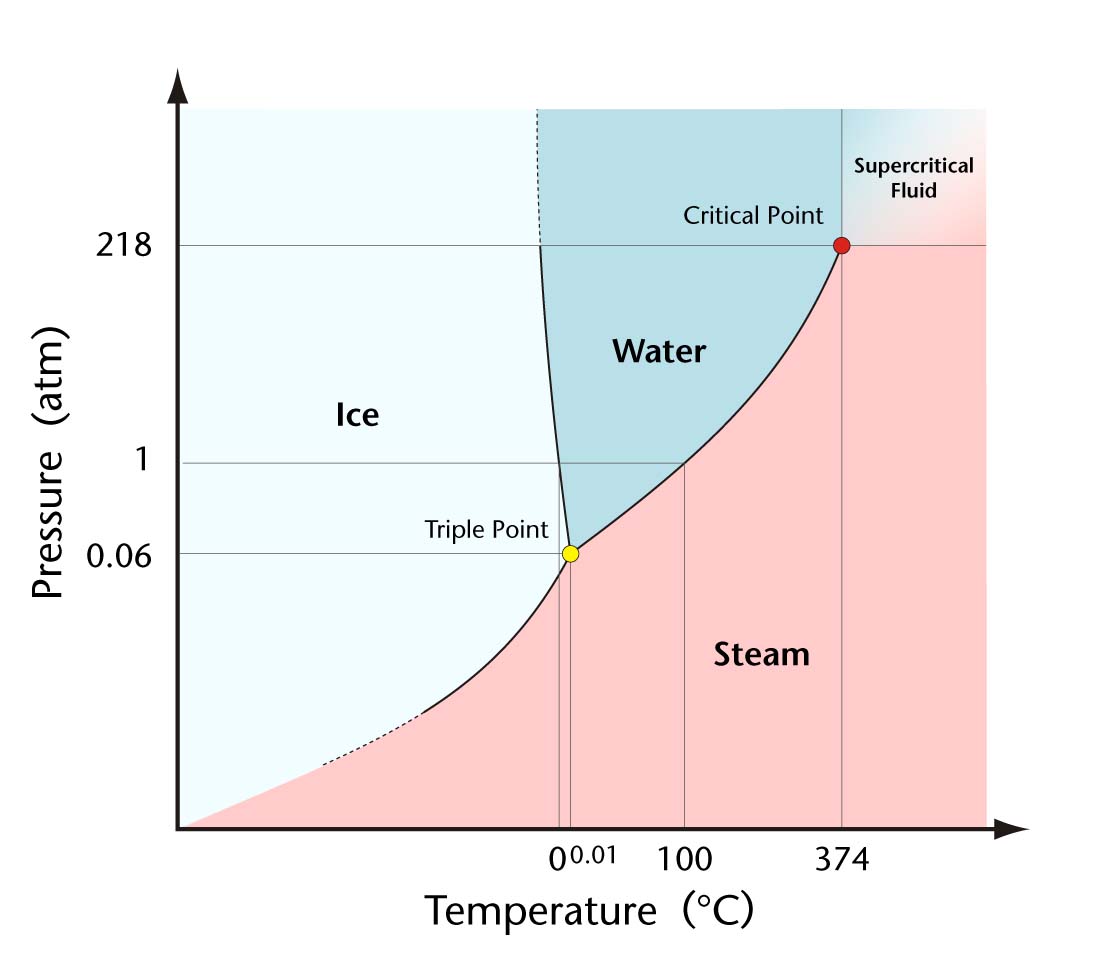
Most of us are familiar with the concept of condensation, having learned about the water cycle in elementary school. We are commonly taught in elementary that water exists as vapor at hot temperatures, condenses to liquid as the temperature drops and eventually expands (not condenses, as ice has a lower density than water due to hydrogen bonding) into ice as the temperature drops further. In high school, we learn about the ideal gas law and how pressure also affects phase transitions, yielding the phase diagram.

Fig. 2: Phase diagram for water (myhomeimprovement.org)
So from this standpoint, we are all familiar with why cold things "sweat." What else is there to it? While the basic principles stand, there are some other viewpoints from which we can view this phenomenon.

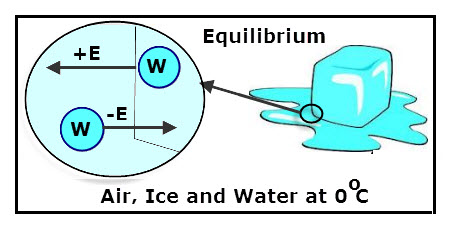
Phase transitions can be viewed as being an equilibrium process, as is demonstrated by the fact that an ice and water mix maintains a 0°C temperature. In such a mix, the ice melting and the water freezing are competing processes that are controlled by environmental factors; if you cool the mix the ice expands, but if heated the ice melts. Additionally, the entire mix must either become ice or water only before the temperature can deviate significantly from the equilibrium temperature of 0°C. What’s cool about this process is that if you track the energy entering the ice and water mix, say a glass of iced coconut water (let's treat this as an ideal glass of pure iced water), we can predict the corresponding phase transitions based on molecular kinetics.

When bonds are formed, whether strong or weak, we know that energy is released as heat. The reverse is true as well, breaking bonds requiring energy. The direction of bond energy transfer can be simplistically remembered taking into account the conservation of energy in a two molecule one-dimensional collision. Say two water molecules are moving towards each other and stick together upon impact. Where did the kinetic energy go? Ignoring molecular vibrations, the energy had to have been released as work, or heat. In order to separate the water molecules, we need to get them to move apart, a.k.a. add work, or heat, to yield kinetic energy. In our glass of iced water, this sort of energy transfer is happening extremely fast and on a large scale, one that can be described by Le Chatelier’s principle since the ice and water form an equilibrium.

Fig. 3: Ice-water equilibrium state (JVC's Science Fun)
Now let’s put the iced water outside on a hot summer Philadelphia day. From experience, we know that the ice will melt and the water will become unappealingly warm. If we track the direction of energy transfer, the higher energy hot air must be donating energy to the lower energy iced water simply because this is the default direction of energy transfer in our universe according to the Second Law of Thermodynamics. The added energy must translate into kinetic energy as temperature is positively correlated to molecular kinetic energy. From our two water molecule system we know that a decrease in water molecule association is predicted, favoring water over ice and vapor over water. This manifests as the ice melting and the water warming and eventually evaporating.  

What has been so far described, however, is only focused on the iced water itself. Let’s change our basis to focus on the hot air along the iced water glass instead (assume the water glass does not hamper kinetic energy exchange between air and iced water). Hot air carries a lot of water since at higher temperatures water enters the vapor phase preferentially according to Le Chatelier’s principle. From the viewpoint of the air, the cold iced water is pulling kinetic energy from it, accordingly cooling the air within a certain range of the glass. Plugging this information back into our two molecule system, the energy must be afforded by reducing the molecular kinetic energy of the air, increasing the probability of water existing in associated groups, i.e. water. And this is why a cold drink sweats in the summer.

Since school is starting up again, I will not be able to post as frequently as I have been during the summer. I will try to post at least once a week, and will probably be doing so during the weekend since this is when time is most available. Please have patience with me on this, and as always thanks for reading!

A Quick Coffee Break

I know that I promised an explanation of what I meant in the last post by truly sustainable energy, and I still owe you guys that. But I wanted to take a quick break from environmental talk to discuss something of great importance to me: coffee. Everyday on the way to work, I stop by Dunkin’ Donuts to pick up a small iced coffee dark roast with cream and sugar. I’m there frequently enough that the employees have begun to reckon a pattern in my order (which basically doesn’t change). Some people aren’t coffee drinkers at all, and neither was I until I started college. The class that broke me was MSE 220. Don’t get me wrong, it was one of the best classes I’ve ever taken. It’s just that a dark, warm classroom was not conducive to my concentration as much as my nodding off.

Fig. 1: The usual Dunkin' Donuts morning coffee (orig.)

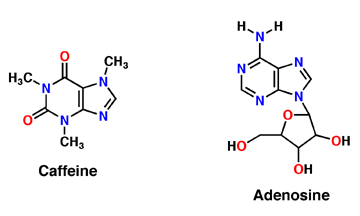
So let’s back up this post with a bit of content: coffee’s main active ingredient, as I’m sure you know, is caffeine. This relatively small organic molecule is the most widely consumed psychoactive drug and makes an appearance in many foodstuffs, especially in beverages. As a drug with dopamine-producing properties, it can be a source of addiction, though the symptoms of withdrawal are much lighter than those of controlled substances. The caffeine content for coffee, tea and soda types can be found here if you’re interested.

Fig. 2: Caffeine and adenosine molecules (University of Texas at Austin)
Caffeine works by competitively binding with adenosine receptors on neurons and is therefore deemed a receptor antagonist of all adenosine receptor types (A1, A2A, A2B and A3) [1]. Adenosine is a central nervous system neuromodulator that binds to receptors on neurons, slowing neuronal activity, dilating blood vessels and causing sleepiness [2]. I’m not good at tracking signaling pathways, but information on the adenosine pathway can be found here. When caffeine binds to the adenosine receptor, adenosine can no longer bind to slow neuronal activity and sleepiness is defeated. The increased neuronal activity caused by caffeine also induces the pituitary gland to secrete adrenaline and institute a state of “fight or flight” activity, another way caffeine energizes the sleepy world round [3].

Besides caffeine, there is other chemistry going on in coffee as well. A morning coffee is a good source of antioxidants (good for reasons mentioned in A Bit on That Shampoo Vitamin) and has been identified as the number one source of antioxidants in America, followed by black tea [1]. Coffee also has a nice hearty flavor, especially with my dark roast coffee, that comes from caramelization and Maillard processes (discussed back in Party Science, Part 3: The Tasty Grub) as well as the subtle bitterness of caffeine. And there you have it, a small cup of coffee science.

I’m going to try posting more photos that I take myself, but I’m not particularly trained in photography and only have my phone camera for the moment. Regardless, let me know what you think of the photos and if you have any photography tips I’d love to hear them. Anything helps!

The Logic Behind an Era of Safe Canning

Canned food is something that most everyone is familiar with. From canned sardines to peaches to condensed milk, canning food is a useful preservation method for our favorite foods. Better food preservation in turn means that the foods we love are available year round. Iconically, the ridged metal can comes to mind, but there are other forms of canning that involve glass jars with metal lids used primarily for home canning but also seen sometimes in stores.

Fig. 1: A sample of canning styles (Best in Packaging)

Many families can their own excess garden goods at home to eat later; according to the CDC, 1 in 5 American households participate in home canning [1]. There are two main sterilization methods used in home canning, one involving boiling the cans and the other involving high temperatures as well as high pressure [2]. Heat kills bacteria, mold and other bad stuff for reasons previously discussed in Party Science, Part 3: The Tasty Grub. However, for the same reason that bacteria are killed by heat the flavor of the preserved food may be affected as well. Pressure kills bacteria possibly as an effect of the expansion of dissolve gases within bacterial cells [3]. Acidity is another factor that affects bacterial survival, and it has been found that acidic foods inhibit the growth of pathogenic bacteria enough to permit the use of High Pressure Processing (HPP) as the only additional sterilization technique while basic foods such as meats require heat treatment as well [4]. 

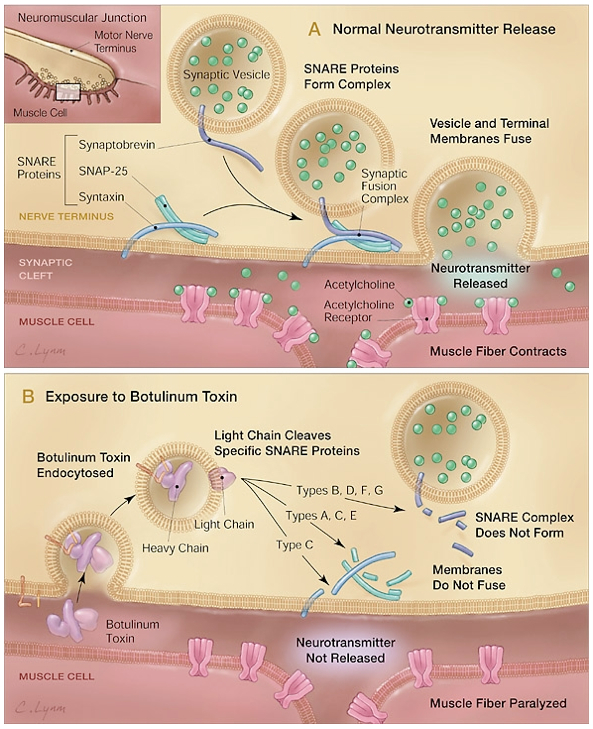
In our current era when canning is considered a generally understood science, it is uncommon to hear of botulism cases from canned foods, especially those produced commercially. Botulism is the name of an illness caused by Clostridium botulinum bacteria that generate botulinum toxin. There are eight different forms of botulinum toxin labeled types A through G (botulinum toxin C is divided into C1 and C2), of which type A is the most potent and types A, B and E are associated with human botulism. Botulinum toxin is one of the most poisonous known biological substances and also happens to be the active ingredient in Botox injections. Botulinum toxin binds to receptors on the presynaptic surface of neurons and is accepted into the neuron where it interacts with proteins related to acetylcholine vesicle transport to prevent the neurotransmitter’s release [5].

Fig. 2: Botulinum toxin mechanism of action (Student Pulse)

Symptoms of botulism are typically those related to an impaired nervous system, such as blurred vision, muscle weakness, slurred speech, drooping eyelids and difficulty swallowing. The presentation of these symptoms after possible botulism exposure is an emergency situation as antitoxins exist to treat botulism if administered promptly and progressed botulism may be fatal due to respiratory system paralysis [6]. 

But botulism and other canning-related illness cases today are rare and for the most part, the effects of canning have been positive for human survival during harsh times and the winter season. I for one love having corn, my favorite vegetable/grain thing, available all year round, and for that I am thankful we have this technology. How about you? Let me know what you think in the comments below, and check out this link to an instructional video if you are interested in canning your own foods at home. 

A Bit on That Shampoo Vitamin

Apart from the well-known vitamins like vitamin C and vitamin D, there are others that are only known in context or perhaps not known at all. Take vitamin K for example. Did you even know there was such a thing? If it weren’t for its bizarre role in blood clotting, I wouldn’t have either. Another one most people only know a bit about is vitamin E. I most associate this vitamin with shampoo because a number of soaps advertise its antioxidant properties as the secret to model-like hair. But questionable advertisement schemes aside, vitamin E does play roles in human health so let’s learn a little about it, shall we?

Though it sounds singular, vitamin E is actually a class of eight fat-soluble antioxidant compounds, all of which contain a chromane ring with a 2-hydrophobic side chain (four compounds with saturated side chains (tocopherols), three with trans double bonds (tocotrienols)) and a 6-hydroxyl group. Varying positions of methyl functional groups around the phenyl portion of the chromane ring is what separates the alpha-, beta-, gamma- and delta-tocopherols as well as the tocotrienol subtypes. 

Fig. 1: Vitamin E subtypes with sidegroup key (American Oil Chemists' Society)

All vitamin E forms exhibit antioxidant properties due to the 6-hydroxyl group’s ability to offer its hydrogen as humble tribute to wandering radical aggressors. The resulting vitamin E radical is stabilized by the electronic properties of the adjacent phenyl ring through delocalization as to be relatively unreactive. In plants, vitamin E is commonly found in chloroplasts where they protect against reactive oxygen species (ROS) produced as byproducts of photosynthesis. In humans, vitamin E plays a similar role. Vitamin E is known to incorporate into cell membranes where it is thought to protect against cellular damage caused by radicals present environmentally or resulting from metabolism by reacting with radicals before they are able to oxidize lipids and other cellular components. Regarding antioxidant ability, alpha-tocopherol has been shown to scavenge radicals faster than lipid substrates can be targeted [1]. 

The most biologically relevant form of vitamin E in humans is alpha-tocopherol, which is selectively ushered into use around the body by the alpha-tocopherol liver transfer protein, while gamma-tocopherol is suspected to hold importance as well though details are currently unknown [2]. A deficiency of vitamin E may result in neuromuscular and neurological problems, retinopathy or anemia, and excessive consumption of vitamin E may cause difficulty clotting [3]. Vitamin E is present in a number of vegetable oils, though processed vegetable oils contain lower tocopherol content due to damage during refining, leafy greens, nuts, seeds, sweet potatoes, avocadoes, eggs, liver and fortified breakfast cereals [4], many of which are typically present in a normal healthy diet. The recommended daily intake of vitamin E is 15 mg for adults, 11 mg for children ages 9-13 and 6-7 mg for children ages 1-8. Now you know stuff about this not well known vitamin, so go tell a friend and make sure they know too!

For more information on vitamin E, check out this description by the American oil chemists’ society (same as ref. 1). It’s a tad technical, but highly informative and an interesting read.

Party Science, Part 3: The Tasty Grub

If you haven't already, please check out Party Science, Part 1: The Beats and Party Science, Part 2: The Lights.

To me, a party isn’t a party unless there’s food involved. Cooking and eating food is something that we all participate in on a daily basis, and the best food is usually to be had at parties. Let’s continue with the final installment of Party Science, Part 3: the Tasty Grub.

The creation of good food is closely related to a number of chemical reactions that make plant matter easier to eat, degrade potential toxins and impart a level of yumminess. From molecular kinetics, we know that the kinetic energy of molecules is proportional to temperature by the following equation:

                       1. E=nCvT, Cv=4.179 J/g°C for water (Chemical Principles, Zumdahl)

Therefore, by increasing the temperature of a foodstuff during cooking, we are increasing the kinetic energy and average molecular translational/rotational speeds and vibrational frequency. The result: destruction! As kinetic energy overcomes the hydrogen bonding energy of proteins such as enzymes, they begin to unfold and denature, losing their conformation and functionality. A classic example of this process is the denaturation of runny raw egg white proteins to produce the rubbery cooked egg white more commonly eaten than the former (deviled eggs anyone?). The degradation of structural proteins also plays a role in softening meats like steak during cooking (this process can occur faster at lower temperatures if enzymes that degrade proteins, such as those in pineapples and papayas, are used in a marinade to lower the activation energy of protein degradation). With plants, heating can denature certain proteins or compounds that are toxic to humans, increasing edibility. Heat also encourages the hydrolysis of cellulose [1] and starches. We experience this process through the soft texture of a baked potato.

As I’m sure you know, cooking also adds flavor to raw foodstuffs through a number of processes. One such process is caramelization, wherein sucrose inverts to produce fructose and glucose molecules that then undergo various reaction pathways to produce volatile, colored and flavorful compounds [2]. This process is notable in flans and apple pies. Another is the Maillard reaction, wherein sugars react with amino acids to again undergo various reaction pathways to produce tasty molecules [3]. The Maillard reaction is best known through the browning of cooked meat.

Fig. 1: The Maillard Reaction (Lynne Swerhone)


So far what has been described are all processes that have been in play for thousands of years, but what can chemistry offer to change the ways we prepare food? Well, if you’ve ever warmed up some cheese dip, then you know of at least one. Microwave ovens use microwaves (unsurprisingly) to warm up food by introducing a fluctuating electric field component that a water molecule’s dipole continually attempts to reorient with [4]. Chemistry has also fostered advances in modern food art and molecular gastronomy. If you ever use fruit juice boba as an ice cream topping or in mixing drinks, those are made of fruit juice mixed with calcium salts and dropped in sodium alginate, a soluble cellulose salt derived from brown algae (Fig. 2). When the sodium ions are replaced by aqueous calcium ions, insoluble calcium alginate is generated to seal in the juice drop in a process called spherification.

Fig. 2: Sodium alginate spherification (Molecular Recipes)


Thermodynamics has also brought us freeze drying through knowledge of phase diagrams and water sublimation [4]. The product is various forms of fruit and vegetable snacks, a healthy substitute for traditional party chips.

In many ways, party food is made to impress. Science helps us explain our current cooking techniques, and a good knowledge of these can allow for improvements and new innovations to reinvent regular party foods. With the music playing, the party lights on and the food ready to be served, your party prep is done so invite your friends and enjoy!

Below I am posting a cool video on how to make mojito spheres using molecular gastronomy, so check it out! And please tell me your thoughts in the comments below.


Experiment: Extraction of Plant Pigment as Food Coloring

My favorite drink to buy during Wawa lunch runs is Vitamin Water. Besides the extra boost of vitamins to supplement my college diet, I like that they use natural plant dyes rather than synthetic ones. To stop the kindling of a debate about whether synthetic dyes are bad for consumers, I would like to state that I don’t believe synthetic and natural chemicals are different; as a chemistry student, I assert that synthetically produced chemicals, if synthesized and refined properly, are the same as ones obtained naturally (aside from possibly isotope content, but I don’t see why that should matter). The problem with synthetic dyes at the moment is that some cannot hold their ground against investigations related to carcinogenic or other deleterious health effects, whether related to the compounds themselves or to manufacturers’ procedures. As for plant dyes, most have been consumer tested by humans for thousands of years. What’s more, natural plant dyes often have antioxidant properties. The biological role of antioxidants is another controversial topic, but suffice it to say that reactive oxygen species (ROS) and other reactive species are produced within your body continuously through processes such as metabolism and have been linked to tissue damage and cancer generation at high levels. Therefore, consuming a normal amount (not a 1,000mg vitamin C tablet every hour) of antioxidants through food can’t hurt and may even have health benefits. The point of bringing up this topic is to introduce the first home experiment I am posting on this blog. I am going to demonstrate how to extract plant pigments for use as food coloring.

Materials:
  • High ethanol content liquor (vodka)
    • 40% (80 proof) vodka used
    • Higher proof makes volume reduction easier due to lower boiling point of ethanol 
  • Pyrex glass container for extraction
    • Liquid measuring cup used
  • Frying pan for water bath
  • Plant matter
    • Tested: canned beets, spinach, watermelon, blackberries
    • Worked: canned beets, blackberries

Procedure:
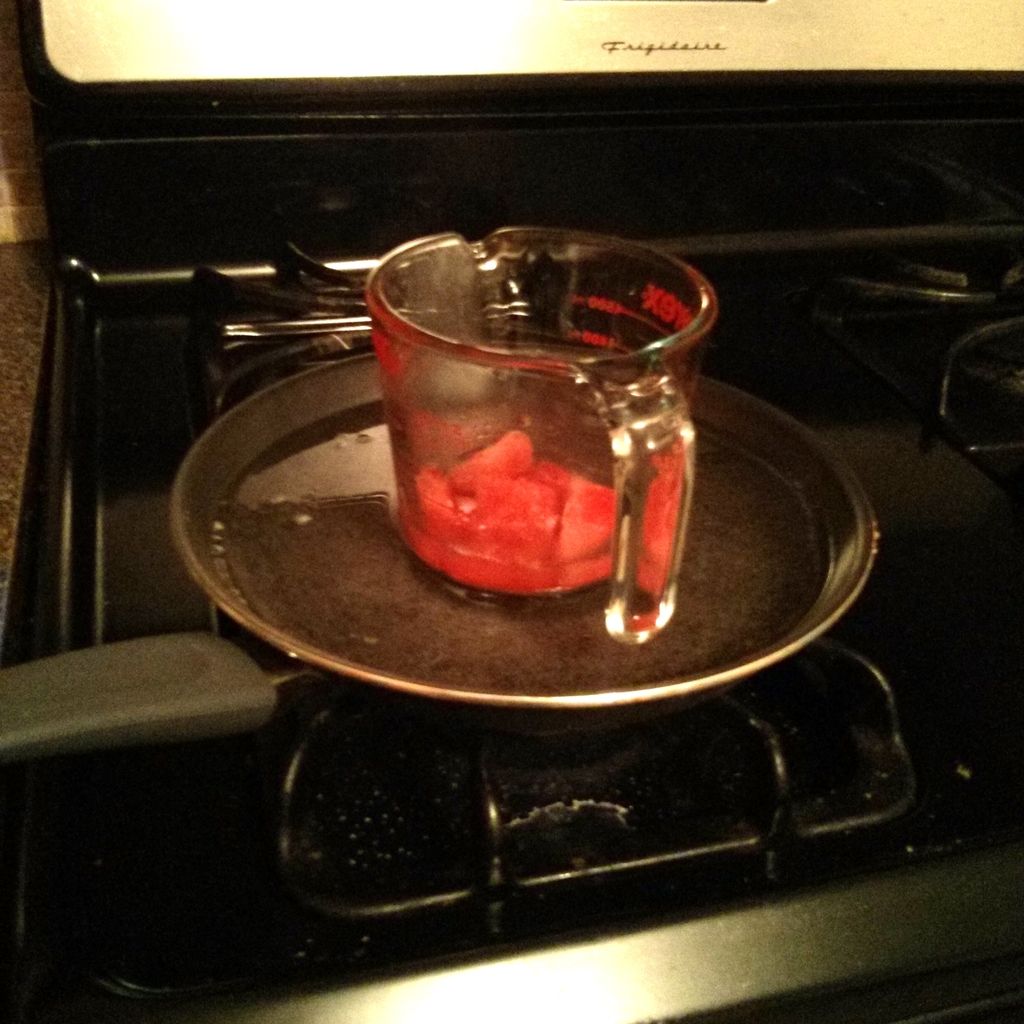
  • The frying pan was filled 3/4 way up with water, then heated over medium heat until small bubbles formed.
  • Plant matter was added to the Pyrex container with enough vodka to cover it, then the container was placed into middle of the frying pan bath.
  • The reaction was left for approx. 30 min (until the color of the vodka no longer appeared to be changing and alcohol could no longer be smelled).
Fig. 1: Coloring extraction setup
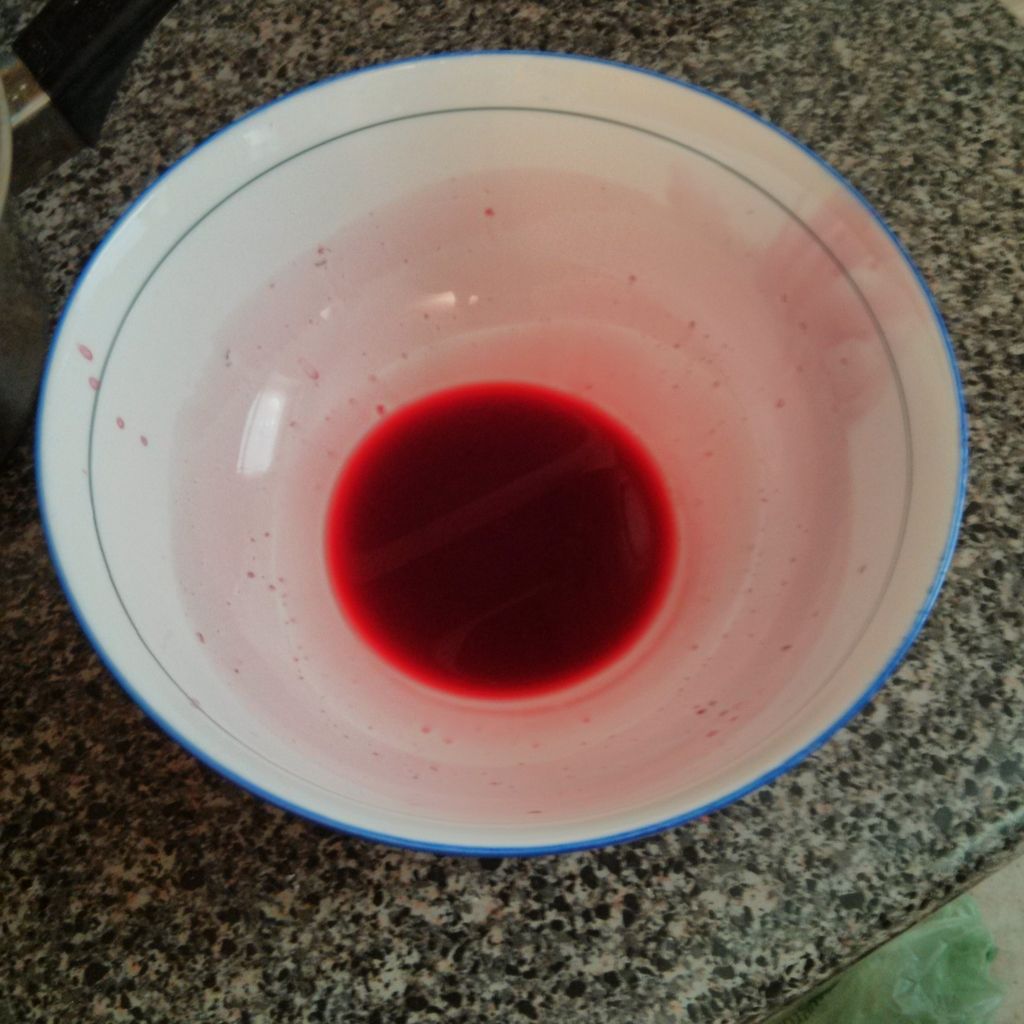
  • The reaction mixture was transferred to a ceramic bowl, then the plant matter was removed before letting the colored solution cool to room temperature.
Fig. 2: Coloring concentration
  • The ceramic bowl was covered and the coloring solution was set to concentrate overnight. The bowl was swirled occasionally to recollect dried dye along the waterline.

Results:
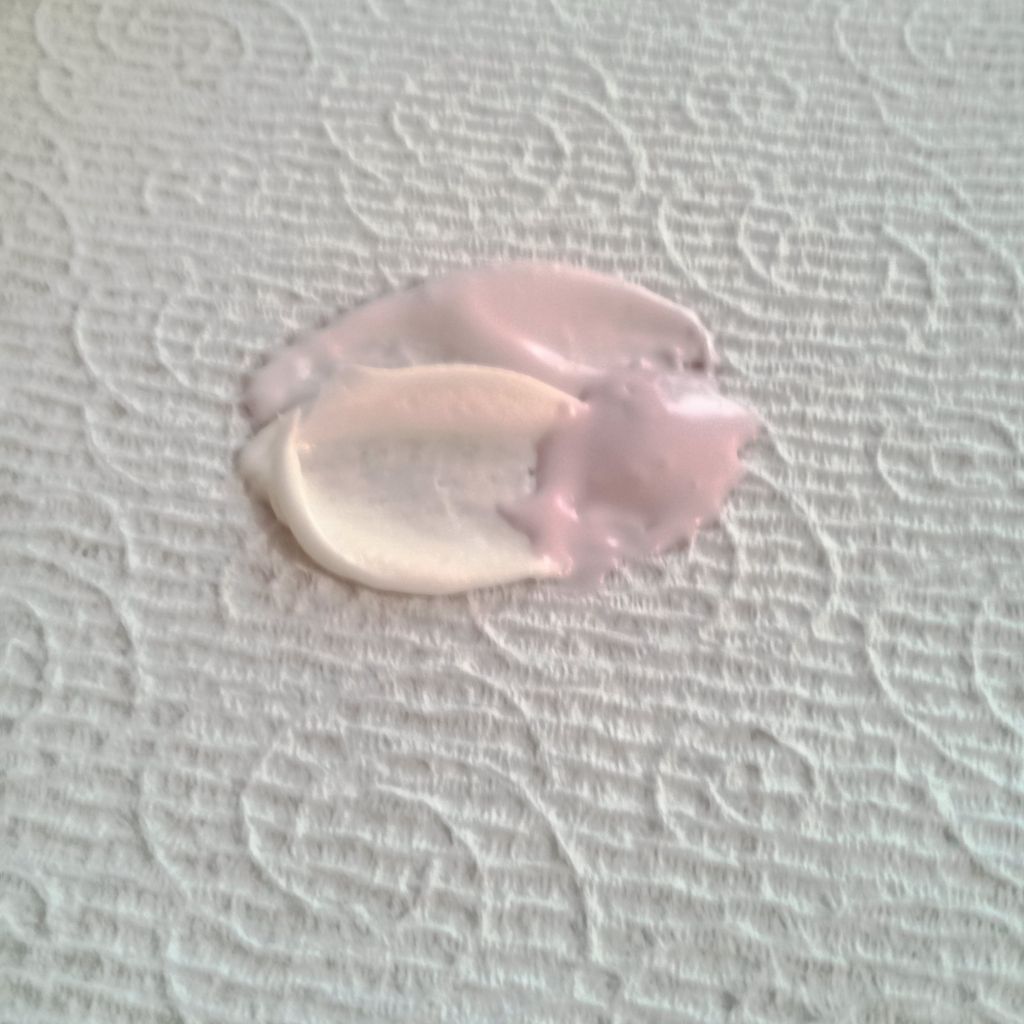
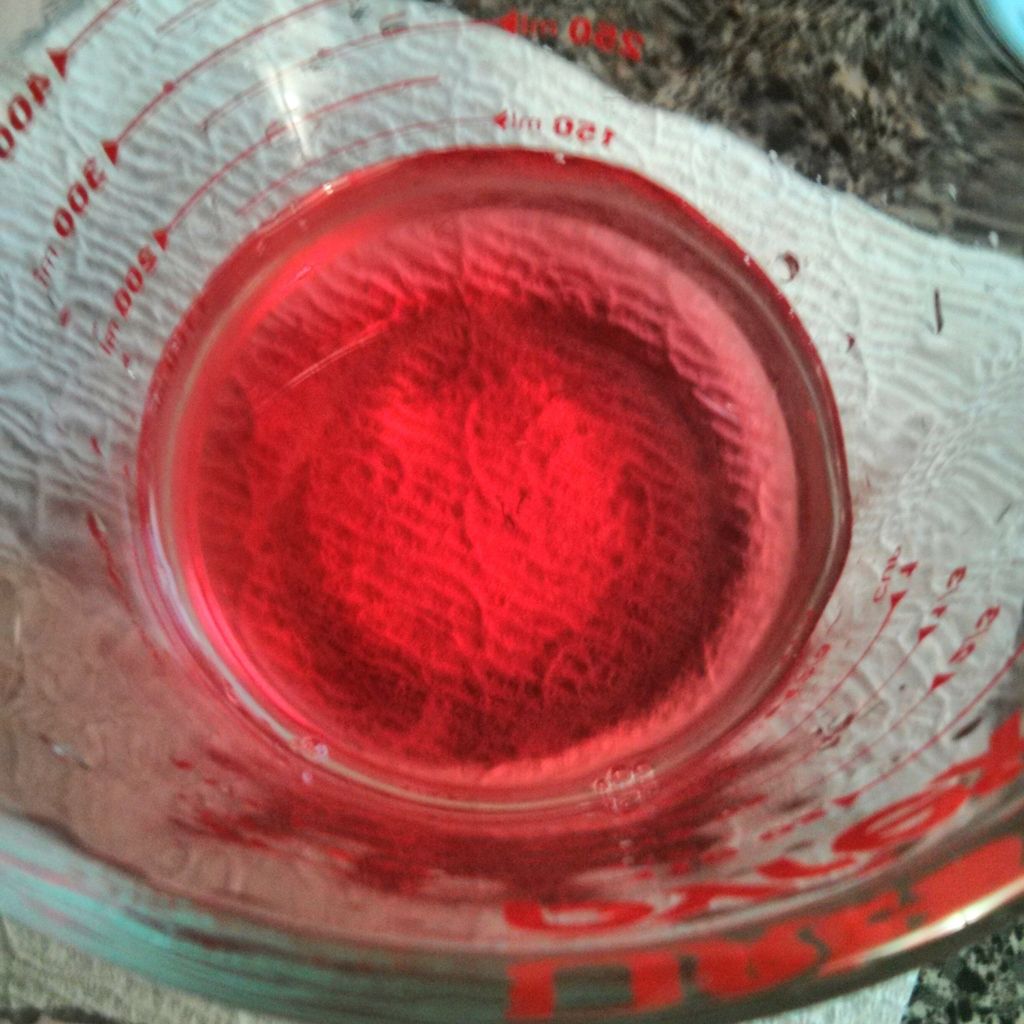
Of the tested plants, the canned beets and blackberries were the only two to work. Both produced a similar hue of purple-red coloring. When the blackberry coloring was used on cream cheese frosting, the result was a light purple-red pastel frosting with a slightly runnier textured due to inadequate dye concentration prior to use and to mixing (Fig. 3). Adding a teaspoon of the dye to a cup water imparted a moderate red coloring which soon thinned (Fig. 4). in both instances, no blackberry taste was conferred (same for beets).

Fig. 3: Blackberry colored cream cheese frosting

Fig. 4: Blackberry colored water

Explanations:
For setup considerations, Pyrex and ceramic containers were used to hold the dye solution as a precaution against possible dye discoloration due to reactions with the container. Low boiling water was used to roughly manage the reaction temperature while reducing the chance of degradation, due to heat in this instance. Coloring concentration was performed prior to testing as a precaution against changes in food texture due to the addition of large quantities of water. The concentrating bowl was covered to prevent dust from depositing in the coloring solution and to lessen the chances of dye degradation due to interaction with ambient light. Vodka was used for extraction rather than water to lower the external polarity relative to the plant material's internal environment. The result is a polarity gradient across the membrane of the plant cells that aided in the migration of relatively non-polar dye molecules outward from within the plant cells while trapping other more polar molecules, one such molecule type being sugars, that would confer flavor. In this way, the coloring produced by this method differs from the juice of the tested plants. Dye color consistency should be considered when using the blackberry coloring, as anthocyanin pigments respond to changes in pH with changes in color. Color degradation over time is another consideration, and coloring soon before consumption is recommended (when added to water, the coloring soon reduced in intensity, an effect which may be reduced or enhanced by the contents of what is being colored) The produced colorings will contain ethanol at low concentrations, a consideration more than a concern. 

I was only able to produce purple-red coloring, but it is likely that other untested plant materials will be able to produce differing colors. I will be leaving which plants can color be extracted from in this method as an open question, so if you find any others please let me know in the comments!